

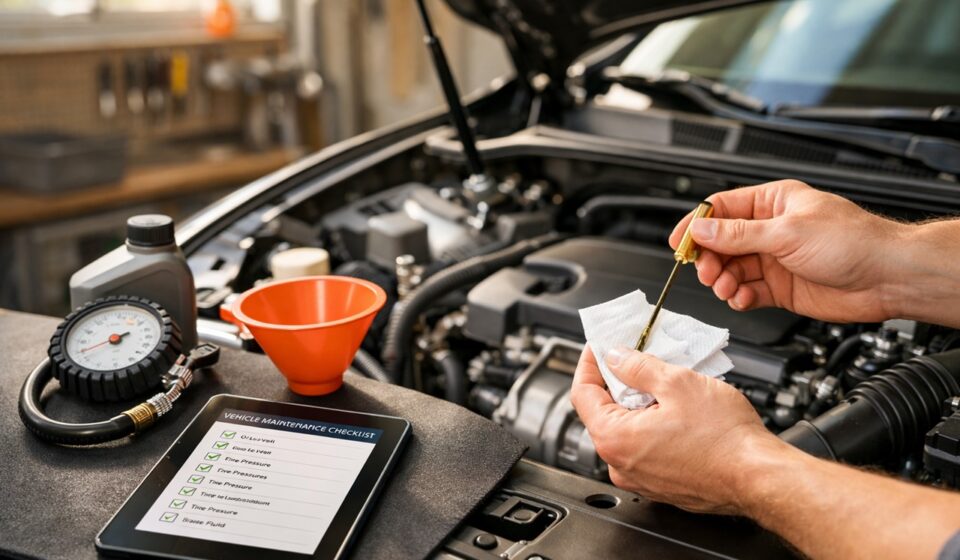

Your car just hit 30000 miles. You want it to reach 200000 without major repairs. Therefore, focus on these proven habits: check oil monthly, monitor tire pressure, follow your service schedule, and address small issues before they grow. Consequently, you will save money, improve safety, and extend your vehicle lifespan.
Moreover, you do not need to be a mechanic to maintain your car properly. As a result, this guide shares practical car maintenance tips for beginners that fit real life and deliver real results.
Your 60 Second Maintenance Checklist
- Check tire pressure once a month for safety and fuel savings
- Monitor oil levels and change per your manufacturer schedule
- Keep all fluids topped off: coolant, brake, transmission, washer
- Replace air filters every 15000 to 30000 miles for better performance
- Never ignore dashboard warning lights or unusual sounds
Keep this list handy. Therefore, you will never miss the basics that protect your investment.
Start Here: The 3 Habits That Prevent 90 Percent of Breakdowns
Most car problems stem from neglecting simple, routine care. Therefore, master these three habits first.
Habit 1: Monthly Fluid Checks
Engine oil, coolant, brake fluid, and washer fluid keep your vehicle running smoothly. Consequently, spend five minutes each month checking levels. Moreover, top off as needed and note any unusual color or smell. Therefore, you can detect leaks or fluid problems early.
Habit 2: Tire Pressure and Tread Monitoring
Properly inflated tires improve safety, fuel economy, and handling. Therefore, use a simple gauge to check pressure when tires are cold. Additionally, inspect tread depth and look for uneven wear. Consequently, you extend tire life and avoid blowouts.
Habit 3: Follow Your Service Schedule
Your owner manual includes a maintenance timeline designed for your specific vehicle. Therefore, stick to recommended intervals for oil changes, filter replacements, and inspections. Moreover, documented service protects your warranty and boosts resale value.
Maintenance by Time Commitment: What to Do When
Not all tasks require the same effort. Therefore, organize your care routine by time investment.
Five Minute Tasks (Do Monthly)
- Check tire pressure and adjust to recommended PSI
- Inspect windshield wipers and replace if streaking
- Top off windshield washer fluid
- Test all exterior lights: headlights, brake lights, turn signals
- Glance at dashboard for warning lights
These quick checks prevent visibility issues, legal fines, and early tire wear.
Fifteen Minute Tasks (Do Every 3 Months)
- Check engine oil level and condition
- Inspect battery terminals for corrosion
- Examine air filter and replace if dirty
- Look under the car for fluid leaks
- Test spare tire pressure and jack functionality
Therefore, you catch small problems before they become expensive repairs.
Professional Service Tasks (Schedule Every 6 to 12 Months)
- Oil and filter change per manufacturer guidance
- Brake inspection and pad replacement if needed
- Coolant flush and replacement
- Transmission fluid service
- Alignment and suspension check
Moreover, a trusted mechanic can spot worn belts, failing hoses, or other issues you might miss.
Smart Habits That Extend Vehicle Life
Beyond scheduled maintenance, these practices add years to your car.
Listen to Your Vehicle:
Unusual noises, vibrations, or changes in performance are early warning signs. Therefore, investigate promptly instead of waiting for a breakdown.
Keep It Clean:
Regular washing removes road salt, bird droppings, and contaminants that damage paint and cause rust. Additionally, wax every few months for UV protection. Consequently, your car looks better and retains value longer.
Drive Gently:
Avoid hard acceleration, sudden stops, and high speed when the engine is cold. Therefore, you reduce stress on engine components, brakes, and tires.
Store Smart:
If you do not drive daily, start the engine weekly and let it run briefly. Moreover, use a car cover for outdoor parking. Consequently, you prevent battery drain and paint damage.
Common Maintenance Myths Explained
Myth: You must change oil every 3000 miles Reality: Most modern cars recommend 5000 to 10000 miles. Therefore, check your manual for the correct interval.
Myth: Premium fuel is always better
Reality: Use the octane rating your manufacturer specifies. Consequently, higher grade fuel offers no benefit unless required.
Myth: Dealership service is mandatory for warranty
Reality: Independent shops can perform warranty compliant service. Therefore, keep detailed records regardless of where you go.
Myth: New cars do not need maintenance
Reality: Early care prevents long term wear. Moreover, following the break in period and initial service schedule protects your investment.
Tools That Make Maintenance Easier
You do not need a full garage to maintain your car. Therefore, start with these affordable essentials:
- Digital tire pressure gauge for accurate readings
- OBD2 scanner to read check engine codes
- Maintenance tracking app for service reminders
- Basic socket set for simple battery or bulb changes
- Funnel and extra fluids for quick top offs
Additionally, many auto parts stores offer free diagnostic scans and tool lending programs.
When to Call a Professional
DIY care handles many basics. However, certain tasks require expertise. Therefore, seek professional help when:
- Warning lights persist after basic checks
- You hear grinding, knocking, or squealing noises
- Brakes feel soft, spongy, or pull to one side
- Transmission shifts roughly or slips
- Fluid leaks are visible under the vehicle
Moreover, building a relationship with a trusted mechanic provides peace of mind and faster service when issues arise.
Looking Ahead: The Future of Car Ownership
The automotive world is evolving quickly. More drivers are switching to electric vehicles and connected cars. While maintenance basics like tires, brakes, and inspections remain important, new technologies will also shape how vehicles are serviced.
If you are curious about where the industry is heading, explore the latest electric vehicle trends shaping transportation to see how technology is transforming modern driving.
FAQs About Car Maintenance
Can I skip maintenance if I do not drive much ?
Low mileage does not eliminate wear. Therefore, follow time based intervals for oil changes and fluid replacements, not just mileage.
What maintenance tasks can I safely do myself ?
Checking fluids, replacing wipers, and monitoring tire pressure are beginner friendly. However, consult your manual and stop if a task feels complex.
How do I know if my mechanic is recommending unnecessary services ?
Ask for explanations and request to see worn parts. Moreover, get a second opinion for major repairs. Therefore, you make informed decisions.
Does regular maintenance really improve fuel economy ?
Yes. Proper tire pressure, clean filters, and fresh oil help engines run efficiently. Consequently, you may gain two to four miles per gallon with consistent care.
What is the single most important maintenance task ?
Regular oil changes protect engine components from wear and overheating. Therefore, prioritize this service above all others.
How can I track my maintenance history ?
Use a dedicated app, spreadsheet, or the service booklet in your glove box. Additionally, keep digital copies of receipts. Therefore, you maintain accurate records for warranty and resale.
Your Next Step: Start Small, Build Consistency
You do not need to master every task today. Therefore, pick one habit from this guide and practice it this week.
Maybe you check tire pressure this Sunday. Or you schedule your first oil change. Consequently, small actions build confidence and compound into long term vehicle health.
Moreover, maintenance is not about perfection. It is about progress. Therefore, celebrate consistency over complexity.
Ultimately, your car rewards care with reliability, safety, and value. As a result, the time you invest today pays dividends for every mile ahead. Keep learning, stay proactive, and enjoy the road with confidence.